

|
 Photo courtesy William Maloney
Courtesy of the National Museum of the United States Air Force
Nicknamed the "Jug" because of its fuselage shape, the P-47 was the heaviest single-engine, single-place fighter built in its time. It became a legend in World War II, used by the US and its allies on many fronts. Following D-Day in France, it performed magnificently in ground support through the end of the war. The two top fighter pilots of the war in Europe flew Thunderbolts, bearing testimony to the P-47's success in combat. The fighter-bomber carried eight lethal 50-caliber machine guns and could lift a 2,500 lb. bomb load and still absorb heavy damage and make it back to home base. Drop tanks allowed it to extend its range. This "D" variant, made in the greatest numbers, featured a clear bubble canopy that allowed 360 degree visibility. Pilots often said that P-47s "had the gliding angle of a brick."
This artifact wears the colors of the 65th Fighter Squadron, 57th Fighter Group, a Bradley Field unit which went to combat in North Africa, Italy and Germany.
Please contact
This e-mail address is being protected from spambots. You need JavaScript enabled to view it.
if you have any information or comments on, or recollections of the Republic P-47D.
Specifications
| Length: |
|
36' 3" |
| Wingspan: |
|
40' 9" |
| Height: |
|
14' 8" |
| Empty Weight: |
|
9,900 lbs. |
| Gross Weight: |
|
17,000 lbs. |
| Cruise Speed: |
|
350 mph |
| Maximum Speed: |
|
430 mph |
| Range: |
|
1,800 miles with maximum external drop tanks |
| Service Ceiling: |
|
42,000' |
| Powerplant: |
|
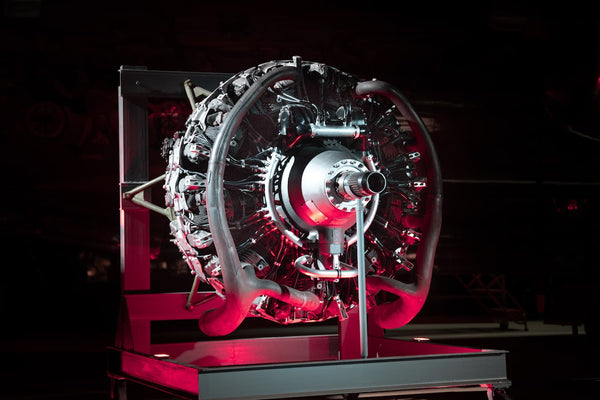
Pratt & Whitney R-2800-59 Double Wasp Radial |
| Year: |
|
1945 |
| Serial Number: |
|
45-49458 |
| Location: |
|
Military Hangar |
Aircraft Collection Index
|